Collaborative post
Brussels is a city that suffers from a bit of a branding crisis. To the outside world, it is often reduced to a grayscale backdrop of bureaucratic buildings, the high-stakes stage of the European Union, and a place where men in suits discuss trade tariffs over expensive coffee. But anyone who has spent a rainy Tuesday wandering through the alleyways of the Saint-Gilles district knows that this image is a lie, or at least, a very thin slice of a much more colorful cake.
To truly see Brussels, you have to throw away the rigid itinerary. You have to travel “without a script.” This is a city that rewards the loiterer, the curious wanderer, and the person who isn’t afraid to get a little bit lost between a medieval church and a neon-lit comic book mural.
The Philosophy of Unscripted Travel
Structured travel has its merits, but in a city as layers-deep as Brussels, a strict schedule can feel like a cage. When you are rushing to hit “The Big Three” — the Grand Place, the Manneken Pis, and the Atomium — by noon, you miss the scent of roasting speculoos wafting from a basement bakery. You miss the sight of an elderly man polishing an Art Nouveau brass door handle. You miss the soul of the city.
Brussels is the capital of surrealism, once home to René Magritte, and that spirit lives on in its daily life. It is a place where a giant mural of a comic book character might overlook a 13th-century wall. To embrace this, you need a starting point that offers context without the constraints of a traditional, stiff tour. This is where the modern traveler finds their stride.
Instead of a pre-paid, robotic bus tour, many are turning to tip-based walking tours in Brussels as their gateway. These tours are the antithesis of the “scripted” experience. Because they operate on a pay-what-you-feel basis, the guides (often students, artists, or historians) are incentivized to be engaging, raw, and honest.
The Grit and Glory of The Marolles
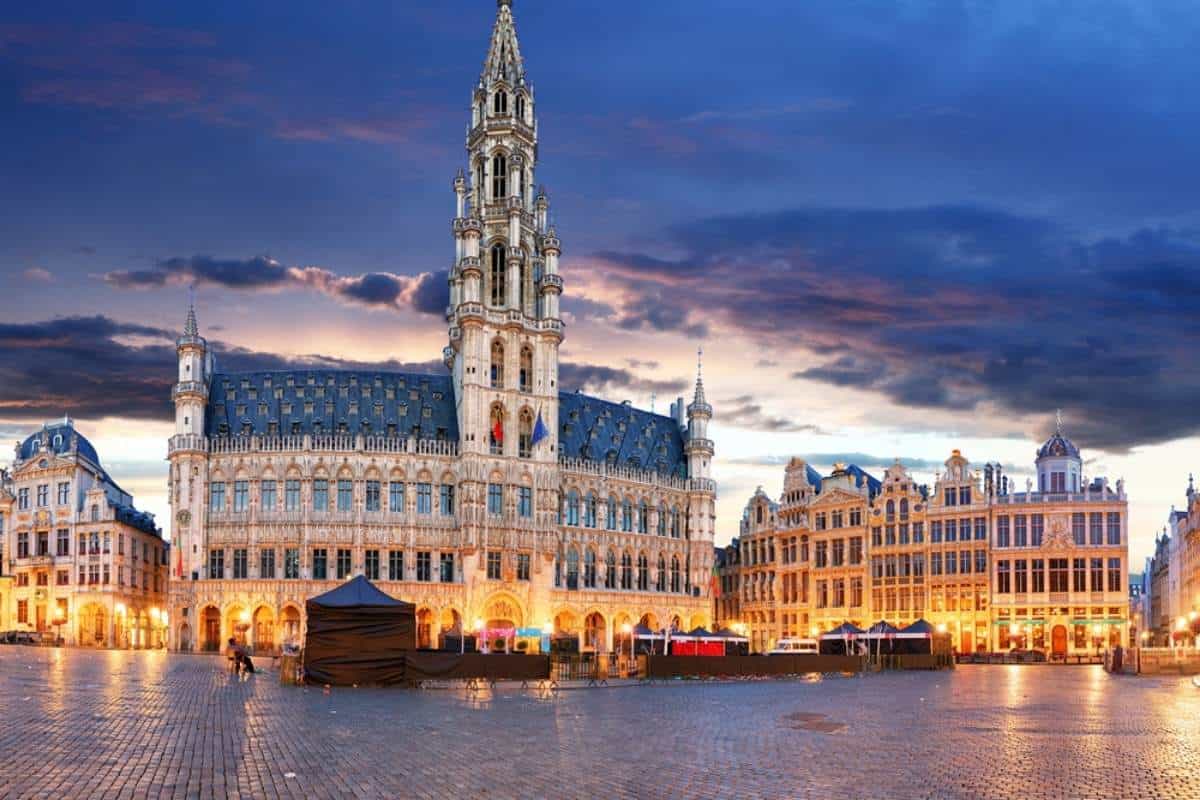
If the Grand Place is the city’s sparkling crown, the Marolles district is its beating, calloused heart. Historically a working-class neighborhood, the Marolles is where you go to hear “Brusselse,” a colorful dialect that blends French and Dutch with a heavy dose of local slang.
Every morning, the Place du Jeu de Balle hosts a sprawling flea market. This isn’t a curated “vintage” market with inflated prices; it’s a chaotic, wonderful jumble of old vinyl records, chipped porcelain, rusted tools, and colonial-era trinkets. There is no script here. You sift through the boxes, haggle in broken French, and eventually find a treasure you didn’t know you needed.
After the market, duck into one of the neighborhood’s estaminets (traditional pubs). These spots offer a glimpse into the local concept of zwanze — a specific type of Brussels humor that is self-deprecating, sarcastic, and deeply endearing. Brussels is the city that has been a crossroads of cultures for centuries, and nowhere is that melting pot more evident than in the grit and resilience of the Marolles.
Architecture as a Living Organism
Brussels is not a city of uniform beauty like Paris. It is a patchwork quilt of architectural rebellion. In the late 19th and early 20th centuries, the city became the epicenter of the Art Nouveau movement. Architects like Victor Horta decided that houses should look like living organisms, with ironwork that mimicked vines and stained glass that filtered light like a forest canopy.
Traveling without a script means taking the tram out to Ixelles or Saint-Gilles specifically to look at houses. You don’t need a museum ticket to see the UNESCO-protected Major Town Houses of Victor Horta. You just need a pair of comfortable shoes and an upward gaze. These neighborhoods are residential and quiet, allowing you to appreciate the “whiplash” curves of a balcony or the intricate masonry of a doorway without the jostling of a crowd. It is a reminder that Brussels is a city built by dreamers and eccentrics, not just bureaucrats.
The Culinary Underbelly
You can’t talk about Brussels without talking about the food, but the “unscripted” way to eat is to avoid anything with a picture of a waffle on a plastic board.
The real culinary magic happens in the fritkots, small kiosks dedicated entirely to the art of the Belgian fry. A true local knows that fries are a meal, not a side dish. They are double-fried in ox fat and served in a paper cone with a massive dollop of Andalouse or Samurai sauce. Standing on a street corner, dodging seagulls while burning your tongue on a fry, is a more authentic Brussels experience than any three-course meal in a tourist trap.
Then, there is the beer. With hundreds of varieties ranging from the cherry-infused Kriek to the heavy, monk-brewed Trappists, the beer culture here is intimidating. Find a wood-paneled bar, order what the person next to you is drinking, and strike up a conversation. In Brussels, beer is the social thing that turns strangers into temporary best friends.
Finding the Surreal in the Everyday
As your journey winds down, you realize that the “script” you thought you needed was never necessary. Brussels is a city that reveals itself in fragments. It’s the mural of Tintin hanging off a fire escape; it’s the way the light hits the Atomium’s spheres at sunset; it’s the surreal sight of a medieval gatehouse standing in the middle of a modern traffic circle.
By opting for flexible experiences and leaving room for the unexpected, you discover a city that is fiercely independent, slightly chaotic, and utterly charming. Brussels doesn’t want to be your “perfect” vacation; it wants to be your most interesting story. It invites you to step off the paved path of the itinerary and into the messy, beautiful, and unscripted reality of Belgian life.
When you finally leave, you won’t remember the EU buildings. You’ll remember the taste of a cold Gueuze, the smell of rain on old stones, and the feeling of a city that, despite being the center of Europe, remains wonderfully, stubbornly itself.