

Naturalis is an amazing natural history museum in Leiden, the Netherlands. It’s one of our favourite things to do with kids in the Netherlands. Find all about visiting Naturalis museum, Leiden with kids and my top tips for making your visit the best day out.

What is Naturalis?
Naturalis is a natural history museum in Leiden, the Netherlands. It is the centre of biodiversity for the Netherlands. Naturalis is the national research institute in the field of biodiversity.
The award-winning museum has one of the largest natural history collections in the world. With over 100 scientists working here they have been studying life on earth for almost 200 years.

Where is Naturalis?
There are two entrances: Darwinweg 2 and Mendelweg 2. It is easily accessible by car, bike or public transport. It is signposted for walking from the train station and there is a bus stop right outside.
Parking at Naturalis
There is parking for the museum on the Mednelweg side as well as a bike shed.. The fee when we visited was 7.50 euros for the day. You can’t book this online with your admissions tickets but you need to use the machines in the museum.
We found the machine didn’t like our UK visa cards but the staff at the information desk were able to sell us one there (which did accept our visa card).
Booking tickets
You are encouraged to book your tickets online in advance. We did in August 2022 and we were able to book our tickets on the morning of our planned visit. You can buy tickets at the museum too.
Tickets at the time of writing are 16Euros for everyone over 4 years old.
You can’t pre-book your parking place.
Pre-book your tickets here – Naturalis Biodiversity Center
Naturalis museum building
The building for this museum is very cool from both the outside and the inside. The building underwent a major extension that was completed in August 2019. The new part is clearly inspired by nature, with lots of repeating patterns including the circular windows.

You enter the museum into a large atrium with ticket machines, an information desk, a shop selling gorgeous toys, books etc, a cloakroom and toilets. There are stairs that lead all the way up the 9th floor which are open and you can see right to the top floor from the entrance. On the opposite wall, you can see a really cool wall of circular windows all the way to the 9th floor.
There is also a cafe and the first gallery (LiveScience) on this level too.

LiveScience
This is the first gallery that you enter. Here you can see lots of specimens including insects, a cow and other mammals.
The room is double height and on the second floor, you can see more specimens, nature books to browse (some are in English and they have books for adults and kids) and scientists at work. On our visit, they were cleaning dinosaur bones.
The scientists here are happy to chat with you and answer your questions. The ones there on our visit spoke very good English.

There is also a 3d printer which was busy creating replica skeleton bones on our visit. It was cool to see this and then later see how these replica bones were being used with kids in a workshop (see below).
At the very top of this gallery, there are several large skeletons of sea mammals suspended from the ceiling. There is a seating area too where there are often free talks. It’s a really inspiring place if you love nature and a great introduction to what to expect from the rest of the museum.
Once you have explored LiveScience, it’s time to show your tickets and climb to the first floor.

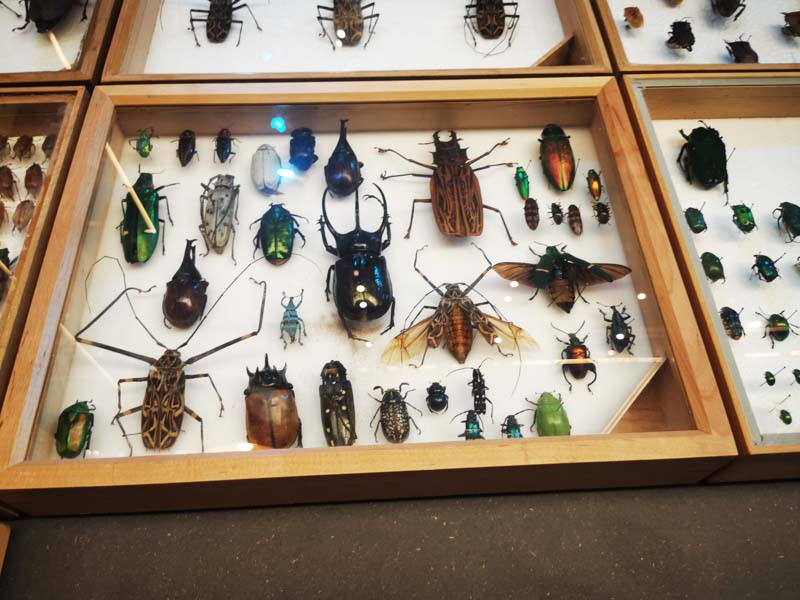
Life
This is the first gallery you enter after climbing your first set of stairs. This was one of my favourite galleries in the museum.
It starts with a large squid suspended from the ceiling and videos on the walls showing other creatures at the bottom of the oceans. As you walk through this gallery you move through seeing sea creatures near to the surface (with a very cool projection of water onto fabric above your head so you feel like you are under the sea).

Then you progress to dry land where you first notice the huge elephant and then the birds and other mammals like a giraffe, zebra, polar bears and so many more animals.
This gallery is fairly dark and there are screens with videos of different animals and habitats throughout.
The lighting circles from night to day frequently and there is atmospheric music too. It really is such a beautiful gallery.


There is also a small interactive area in this gallery where you can feel the textures of snakeskin, zebra hide and more.

To your left, early on in this gallery is a workshop. This is a place for you to get be hands-on and a particularly great place for kids.
There are microscopes and specimens and a member of staff on hand. My children enjoyed trying to piece together the skeleton of a mammal. The pieces of skeleton bones are all plastic, printed on the 3d printer that you can see in action in LiveScience.
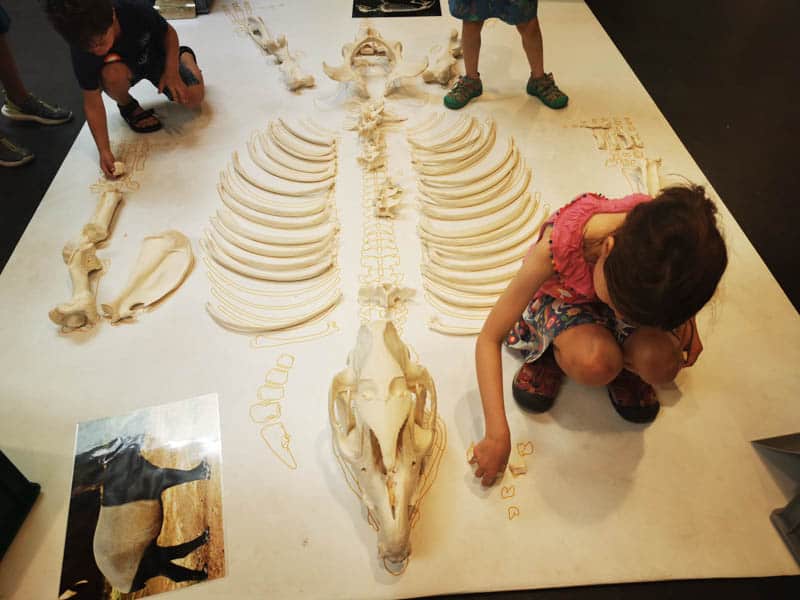
Earth
Once you exit life, you are right next door to the earth gallery. This is a really cool space with a couple of campervans, a mini house, a Japanese structure and some cool floors too.
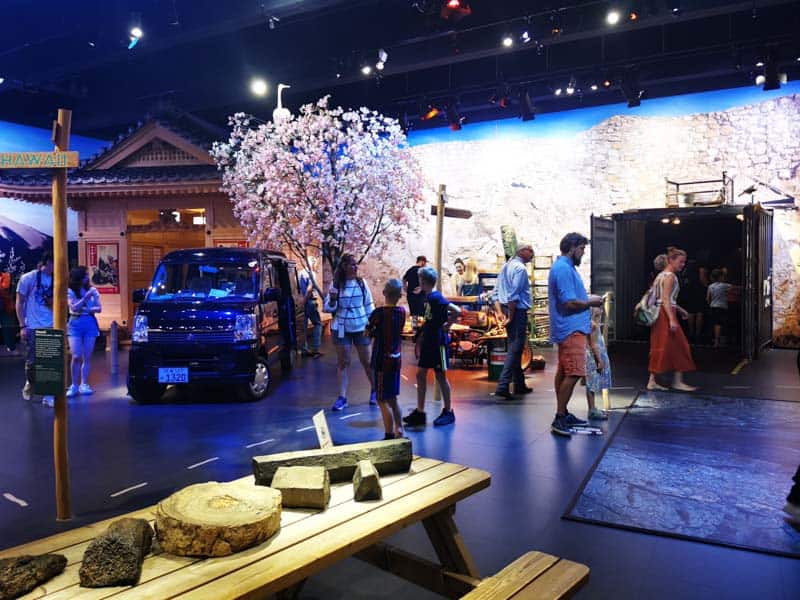
The gallery is all about Plate tectonics and the room is split into Hawai, Japan and Iceland.
In the Iceland area is a mini house with a video playing explaining how plate tectonics play a role in the landscape of Iceland, Hawaii and Japan, all using food to clearly demonstrate the principles. It is in Dutch with English subtitles. I really enjoyed this short film and learnt a lot.
The video clearly demonstrates these principles and is great for adults and older children. Young children are not forgotten about as there is a pretend kitchen on one side where they can play whilst you watch the video.
At the back of this space is a small exhibition on rocks with lots of different types on display. Again young kids aren’t forgotten about as there are hard hats for them to wear.
Dinosaur age
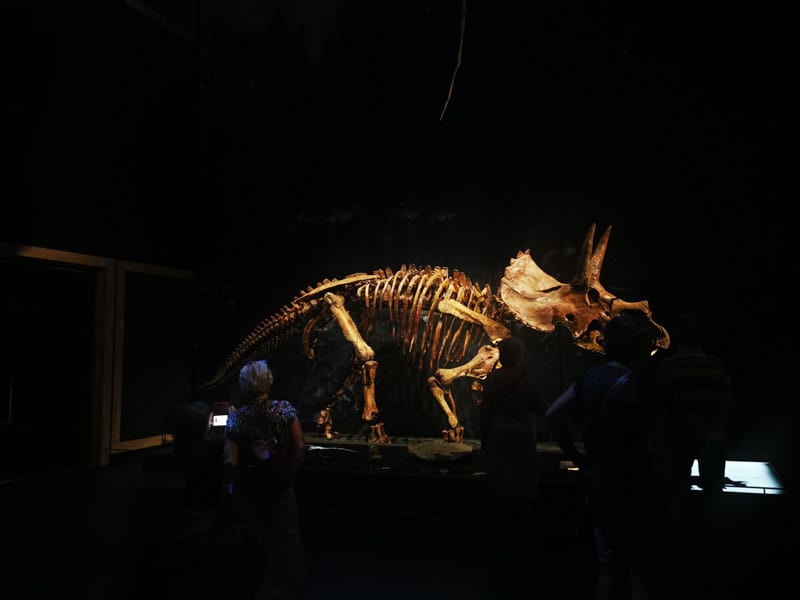
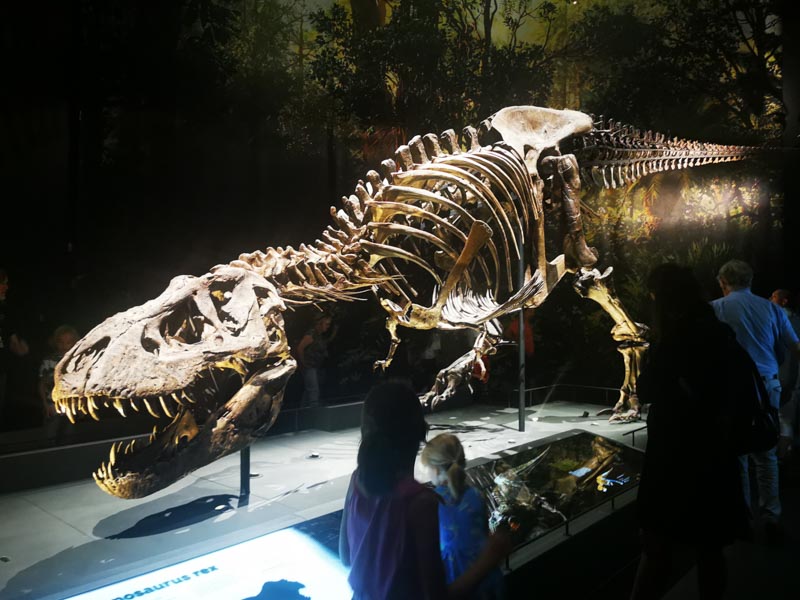
Dinosaur age is the next gallery and here you find lots of dinosaur bones and fossils on display.
There is a fully built skeleton of a Camarasaurus, Stegosaurus, triceratops and a T-Rex. There are other smaller dinosaur skeletons around and fossils including a T-Rex poo!
Rexperience
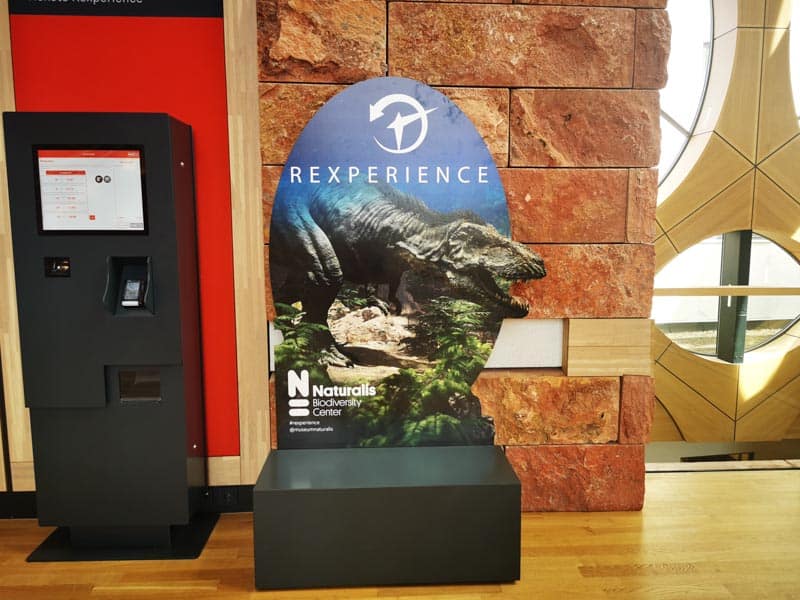
This is right next door and is a separate exhibition that compliments the Dinosaur age gallery. It does have an additional cost of 2 euros per person and children need to be 8 years old. You need to pre-book a time slot. You can do this online when you pre-book tickets or you can do so right outside the doors to the experience.
It’s worth noting that all the speech is in Dutch with no subtitles but you can still enjoy the experience without speaking Dutch.
You enter a room staged like a spaceship, where you sit in seats with lap belts. You watch a 3d video (glasses provided). The seats vibrate and tilt a bit to add to the experience. It’s really fun.
The spaceship then crashes and you escape into a jungle-themed room. Here you come face to face with a life-size animatronic T-Rex!
The experience lasts approximately 20 minutes. My husband and 9 year old loved it.
Ice age
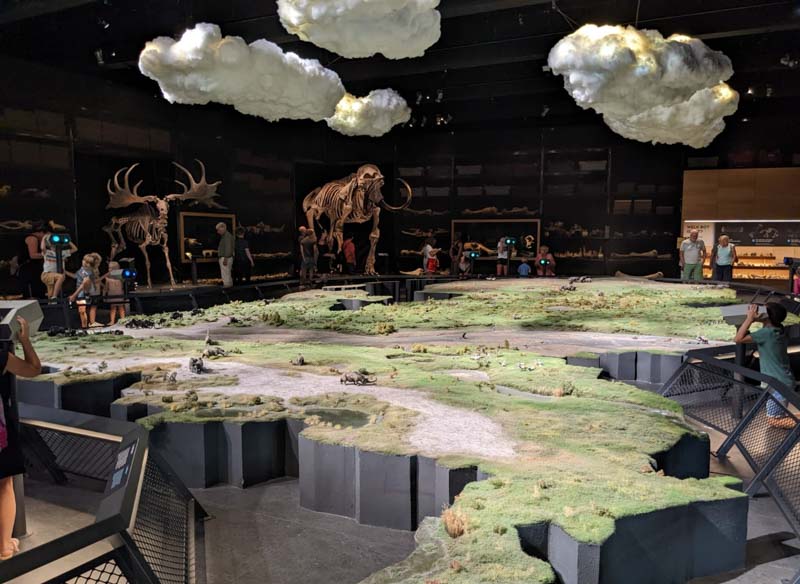
In this gallery, you learn about the ice age in the Netherlands. There is a large miniature model of the Netherlands in the middle of the room, as it would have looked in the ice age, complete with animal models like mammoths and other animals.
There are several telescope-like headpieces with videos playing bringing the model to life. Around the edges of the room are large skeletons of giant deer, a mammoth and a cave bear.
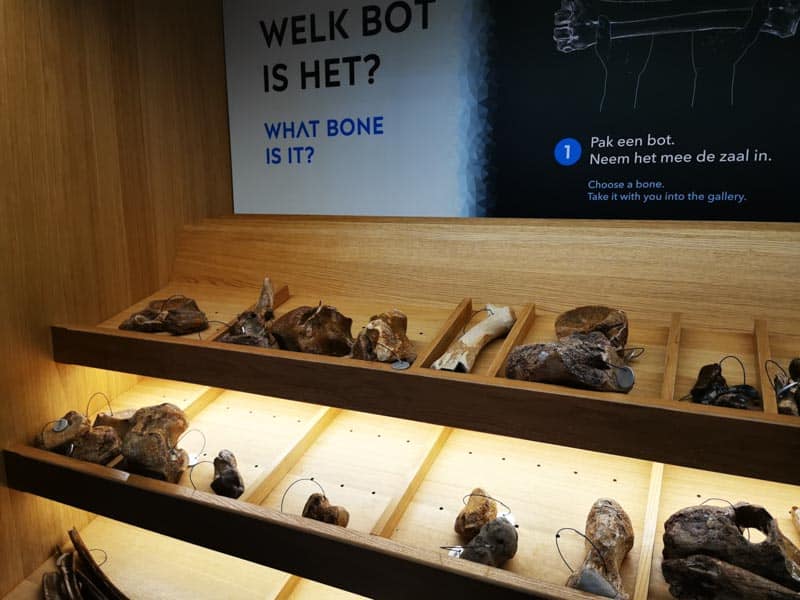
In the corner of the gallery is a display case of bones that you can pick up and take around the gallery to see which animal they are part of. There was a very helpful member of staff here who chatted in good English with us and took my girls around the room with a bone to show them which animal it came from.
There is another workshop in this area where children can play with a dinosaur play set.
Early humans
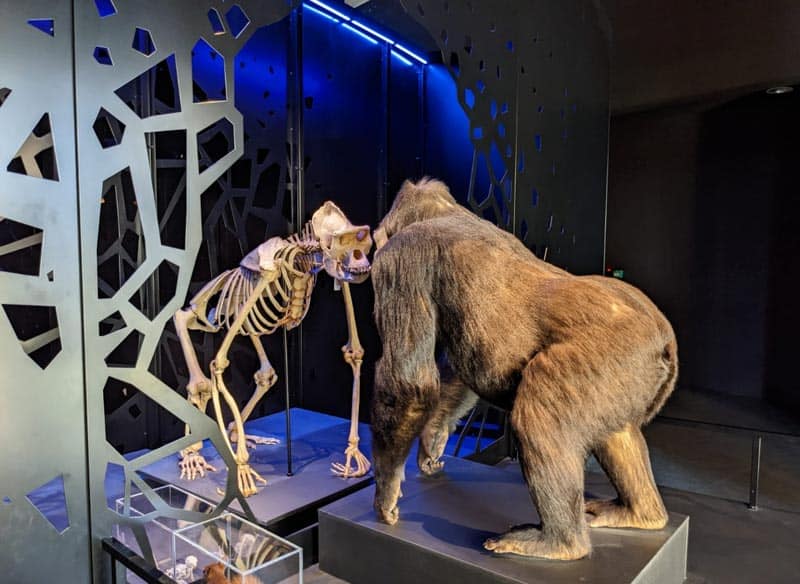
This gallery is all about the work of Eugène Dubois who was from the Netherlands and discovered some parts of a skeleton from a homo erectus. There is a short video to watch and then you can see the pieces he discovered and a model of what they believe the first homo erectus looked like.
The temptation
These final two galleries are on the top floor and some areas possibly aren’t suitable for younger children. However, some parts particularly in the temptations gallery are very child-friendly.
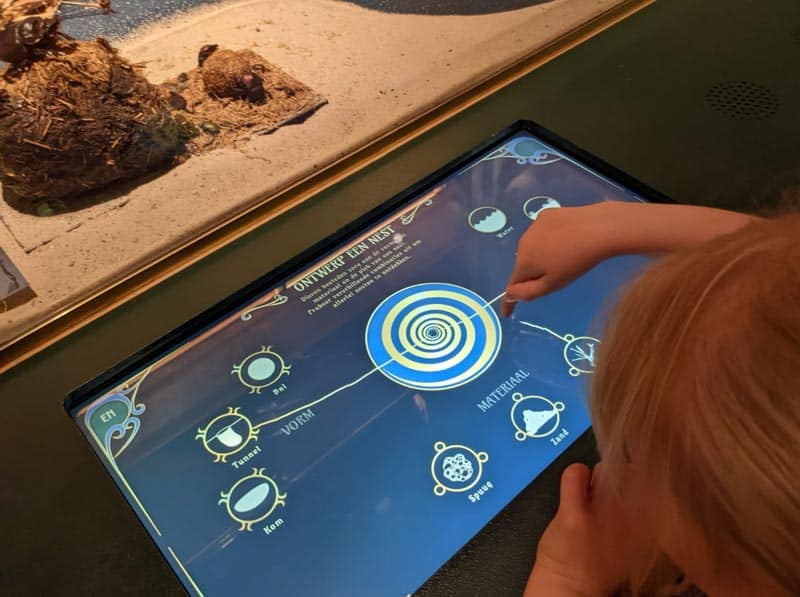
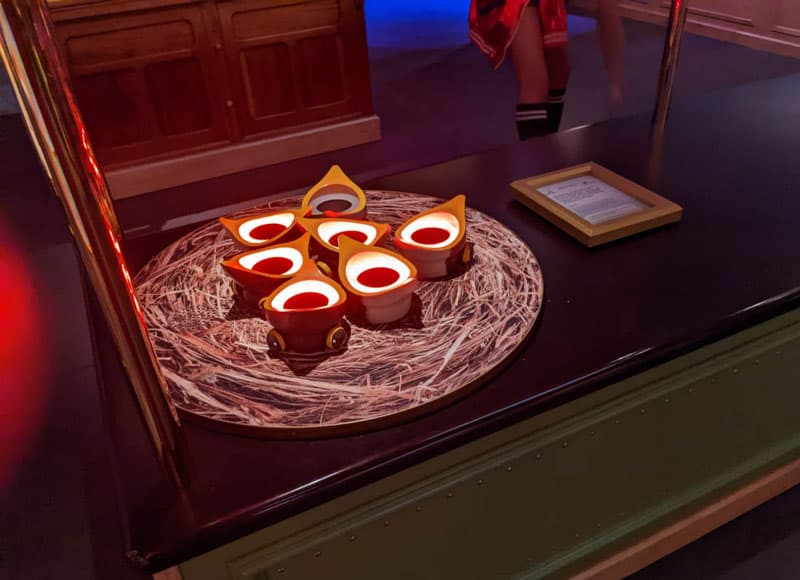
The temptation gallery particularly is a very playful gallery for kids with lots of interactive parts for children like a soft play-like area to build a nest, an exhibition area to crawl through, a chance to learn bird mating dances (a very fun video game where that learn the dance moves) and my youngest particularly enjoyed the baby bird feeding activity where you put balls in the open beaks.
The area that deals in a lot more details with animal mating and is better suited to older children and adults is discreetly behind a set of pink curtains.


Death
This gallery deals with death and some parts were too much for our youngest such as a large 360-degree video showing the sped-up process of decay and an animal being eaten by maggots. We quickly moved on from this area.
There were many parts that are fine for young children but it is the least interactive. It’s not particularly morbid and it is an interesting and informative area but a few parts were a little gruesome for young kids.
Can you take a picnic to the Naturalis museum?
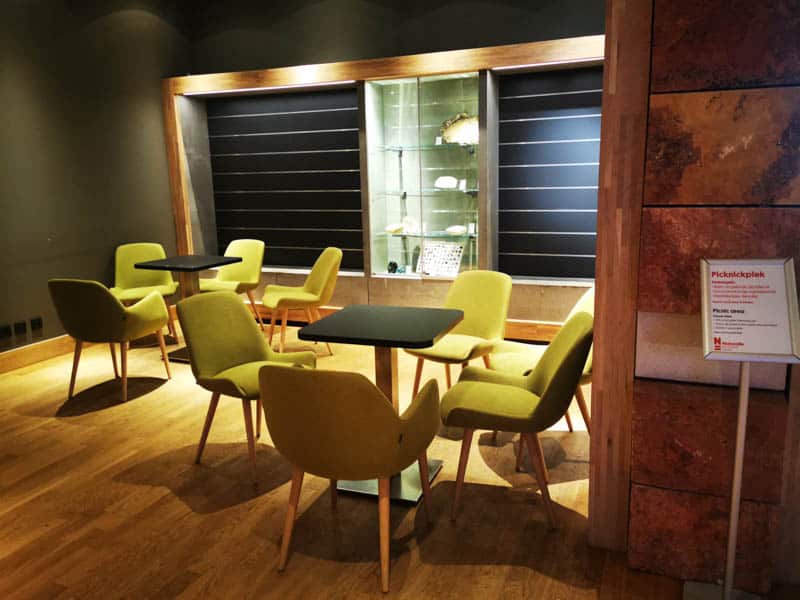
Yes, there is a small picnic area on floor 3 as well as a larger picnic area outside too.
Can I bring a pram?
Yes, there are lifts but they ask you to leave them at home or in the locker room if you can.

Where to next?
There are so many great places to visit in the Netherlands with kids. Here are a few more places we enjoyed visiting during our stay in the Netherlands.
- Want to visit a fairytale forest and magical theme park? Then you need to find out more about Efteling from my Efteling review
- You can’t visit the Netherlands and not see windmills. We loved our visit to Kinderdijk windmills.
- Are you planning to visit Amsterdam? if so you need this guide – Things To Do In Amsterdam For Families.