
Collaborative post
There is a sensation that comes with studying a new language: a door cracking open, then widening with every phrase, every character you master. With Chinese, that door doesn’t lead to a room.
It opens into an entire world with its own architecture, rhythms, and cultural habits. Chinese isn’t simply another subject to add to a skill list. It’s a transportation device. It reorients how you travel, how you read business signals, how you navigate global friendships, and how you see your own culture reflected in another.
This isn’t an argument about being competitive or ticking an academic box. It’s about access, real, tactile access to places, stories, and opportunities that stay invisible to monolingual travelers.
The Language That Reveals More Than It Hides
Walk through Beijing’s hutongs, the alley-like residential neighborhoods that function like living museums. A visitor with no Mandarin sees charm. A visitor who understands the language sees something else.
He or she hears history: words that have survived dynasties, street signs that show how the city organized itself long before skyscrapers appeared, conversations that explain modern China in small fragments of daily routine.
Chinese isn’t neutral. It changes how you observe cities. It changes how you listen.
The Doorway to Culture You Can Actually Enter
Language classes are often discussed as if they exist in isolation. Study here, practice there, then eventually you “use” the language. Chinese dissolves this separation. Understanding even a little connects you directly to cultural touchstones, food, architecture, festivals, music.
Imagine discovering that the word guanxi doesn’t simply translate to “connections.” It dictates how relationships work in business, hospitality, and even problem-solving. Or that a simple four-character idiom can carry entire moral philosophies inside its compact structure. You start understanding how Chinese culture thinks, not just what it says.
From Simple Phrases to Entire Lifelines
There’s a thrill when you read your first Chinese character without help. It’s more artistic than it looks from the outside. You see history embedded in brushstrokes. The structure of the language itself trains your memory differently. That cognitive shift pays dividends far beyond linguistics: problem-solving, spatial recognition, even creativity flex in surprising ways.
And if someone in your family or social circle is studying language seriously, you’ve probably already heard of secondary Chinese tuition, a structured academic route that many parents choose not only for grades but for global literacy. It’s a form of education that doesn’t just prepare students for exams. It prepares them for the future.
Where the World Opens Up
Think about regions you’ve visited or dream of visiting: New York, London, Tokyo, Sydney. Now pair that with a language that lets you speak to 1.4 billion people across China, Singapore, Malaysia, Taiwan, Hong Kong, and a growing diaspora in practically every major global city.
Chinese isn’t a niche. It’s a passport.
The United States: China’s Voice is Everywhere
Chinese enclaves have been part of American urban fabric for over a century. In places like San Francisco and New York, Mandarin and Cantonese aren’t tourist attractions. They are daily-life languages. Business, education, tech startups, and cultural communities run on them.
The American traveler who speaks only English can walk through Chinatown and see architecture and food. The traveler who speaks Chinese can walk into conversations, networks, insider recommendations, local stories, and not just observe culture, but join it.
Europe: A Meeting Point, Not a Border
Europe has a different relationship with China. Not historical immigration in the American sense, but modern collaboration in science, research, art, and tourism. European universities are filled with exchange programs and joint research initiatives. The continent is a playground for travelers who want proximity to different cultures without long distances.
Speaking Chinese gives you entry into a network so wide it doesn’t fit into a single city or country. It turns Shanghai and Madrid into neighbors.
Travel Changes When You Speak the Language
Think about arriving in a foreign country without relying on English as a crutch. You are no longer the tourist who asks for basics in broken gestures. You understand menus, street signs, stories, jokes.
And China is built for this kind of exploration.
Cities That Speak Their Own Visual Language
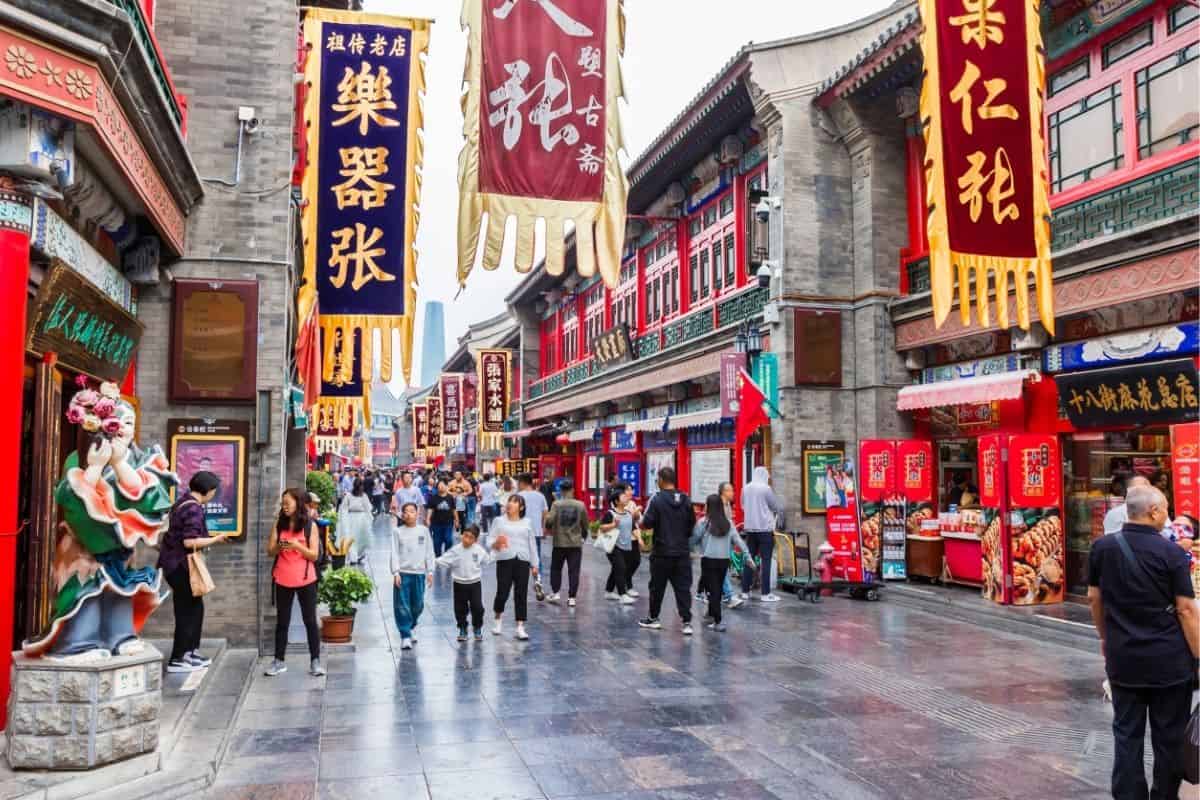
Shanghai isn’t just a skyline. Beijing isn’t a museum of emperors. Xi’an isn’t only the Terracotta Army. Traveling through China is like moving through pages of a history book written in architecture, food stalls, river paths, neon, bridges, and temples.
A traveler with Mandarin doesn’t guess. They understand.
Landscapes That Swallow You Whole
The Li River in Guilin is like a painting. The Yellow Mountains shift mood with fog. Yunnan’s deep valleys, Sichuan’s hidden monasteries, Hong Kong’s busy harbors—each is a destination that welcomes visitors in English, but rewards Mandarin speakers with deeper layers.
Local conversations, cultural nuance, recommendations that aren’t printed in guidebooks—these details transform a trip into something unrepeatable.
Beyond Travel: The Professional Shift
Speaking Chinese is more than a solo advantage. It opens the door to business partnerships, remote work, international projects, and careers that connect cities instead of isolating them.
If your interest touches business, commerce, technology, global policy, or education, understanding China isn’t optional anymore. It’s foundational.
Innovation Moves at China’s Pace
Chinese tech companies don’t always imitate Silicon Valley. They lead. They experiment. They scale ideas in real time. Understanding the language makes you part of that momentum instead of watching from a distance.
The New Global Language of Opportunity
There was a time when learning French signaled elegance, Spanish signaled reach, and English signaled global business. Today, Chinese signals influence, economic, cultural, technological.
It’s not just the language of the future. It’s a language of right now.
How to Start Without Feeling Overwhelmed
Learning Chinese looks intimidating from the outside. Characters, tones, grammar that works differently than European languages. Yet thousands of learners find themselves pulled in by the structure, not repelled.
Build Skills Instead of Fears
Start small: apps, beginner classes, conversation exchanges, music, short video content. Take your time. The mind adapts.
It’s common for people to begin with informal study then turn to something more structured—this is where secondary Chinese tuition comes in for many families, especially students aiming for both academic and cultural fluency. The point isn’t rushing. It’s building consistency until the language stops feeling like an academic subject and more like a tool you enjoy using.
Make the World Your Classroom
The best thing about learning Chinese: it refuses to stay confined to textbooks. You start recognizing characters in airports, on restaurant menus, in film credits, in product labels, and most surprisingly, in conversations happening all around you.
Chinese integrates into daily life because it’s already present there.
The Adventure Begins Before You Travel
Learning Chinese isn’t about chasing novelty. It’s about gaining an inside perspective instead of standing on the outside looking in. It turns travel into immersion, business into partnership, education into opportunity.
Chinese is a global language tied to global journeys. It gives you the tools to enter new spaces instead of simply visiting them. And once that door opens, you realize the real reward isn’t mastering vocabulary or grammar.
It’s the world that comes with it.