
I love teaching children about the natural world around us through play. This post will show you how to set up a butterfly life cycle sensory bin that your kids will love and they’ll also learn all about the butterfly life cycle through play. Find more Sensory play ideas here.
Ad – This post contains affiliate links. As an Amazon Associate, I earn from qualifying purchases. If you purchase through the links I may earn a small commission at no extra cost to you.
Why you’ll love this butterfly life cycle sensory bin
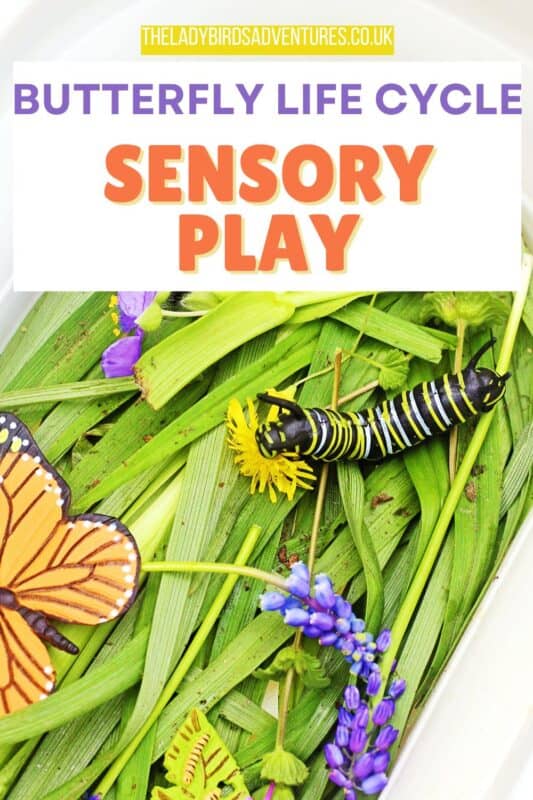
This butterfly life cycle sensory bin is a fun and hands on way for kids to explore nature, sensory play, and early science concepts all at once. Sensory play like this is a great way of introducing children to nature science and getting them to love nature.
Children can touch and investigate each stage of the butterfly life cycle while using tools like tongs and magnifying glasses to build fine motor skills and curiosity through play. You’ll love watching them explore and hearing the stories they make up.
Supplies needed for this butterfly life cycle sensory bin
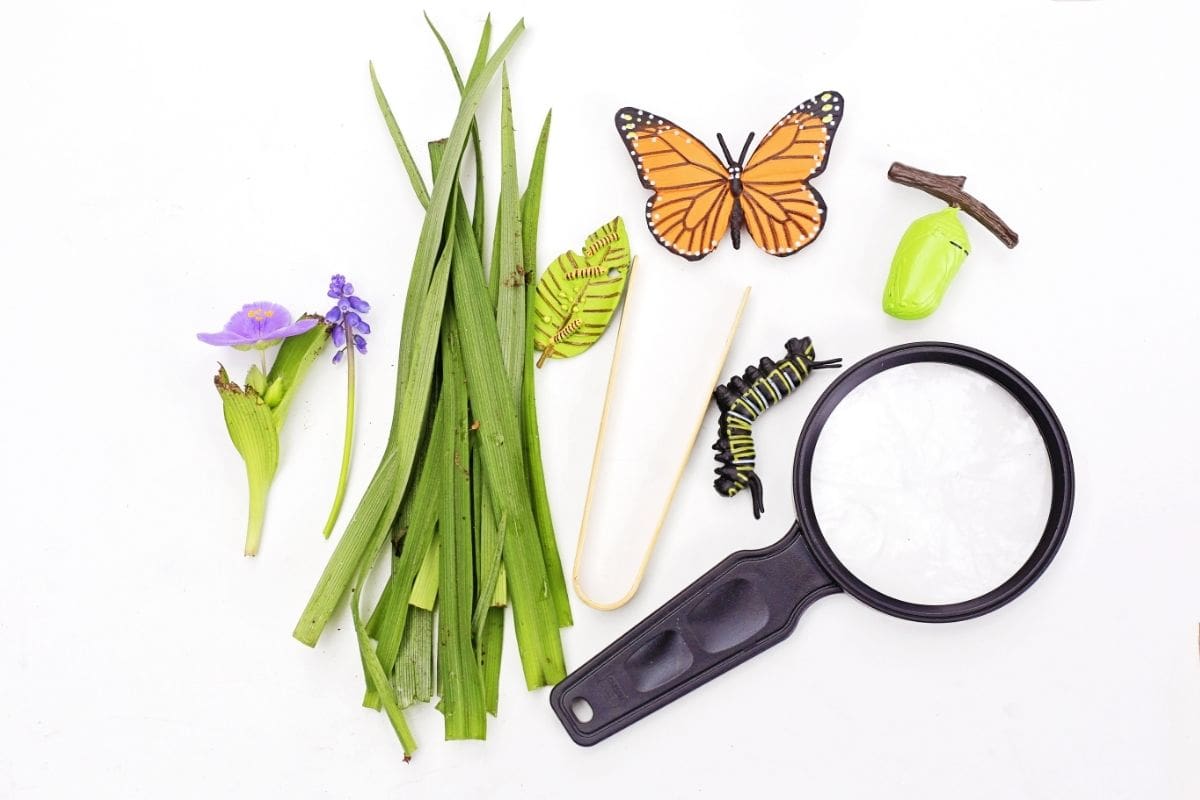
Here’s what you will need to set up this sensory bin.
- Grass clippings
- Toy butterfly life cycle pieces (egg, caterpillar, chrysalis, butterfly)
- Flowers
- Magnifying glass
Butterfly Life Cycle Sensory Bin
A fun nature based sensory bin to teach kids about the life cycle of a butterfly
Materials
- Grass clippings
- Toy butterfly life cycle pieces (egg, caterpillar, chrysalis, butterfly)
- Flowers
Tools
- Magnifying glass
- Sensory bin
Instructions
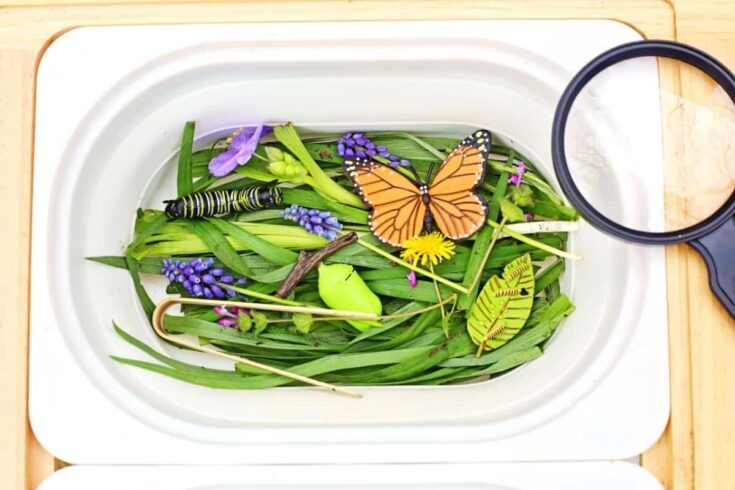
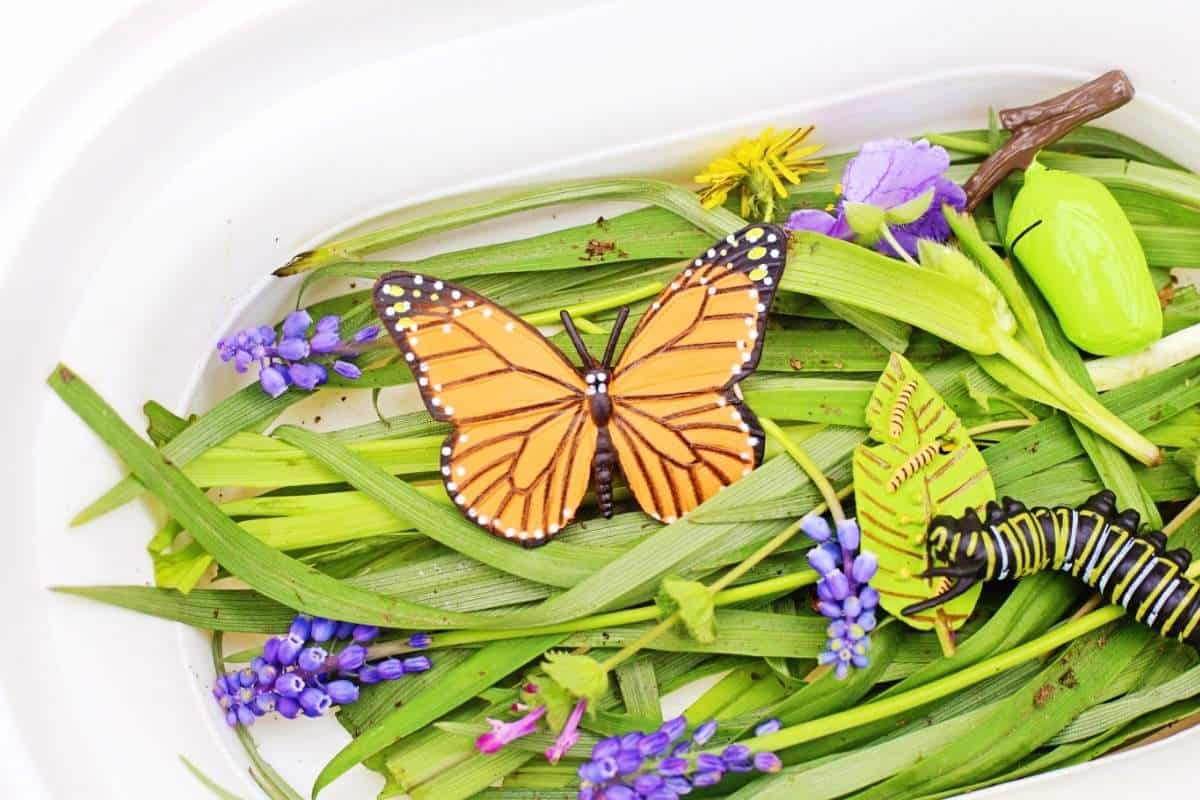
- Create the base layer by filling the sensory bin with fresh grass clippings. The grass gives the bin a soft texture and helps create a nature-inspired environment.
- Scatter the flowers around the bin. Tuck them partially into the grass to make the space feel like a miniature garden.
- Arrange the egg, caterpillar, chrysalis, and butterfly pieces throughout the bin. You can line them up in order or hide them slightly in the grass for kids to discover.
- Place a magnifying glass nearby so kids can examine each stage closely.
How kids play with this natured based sensory bin
There are lots of ways that children can play with this sensory bin. Some children will dive straight into explore this sensory bin and others might need a bit of encouragement and ideas for how to play.
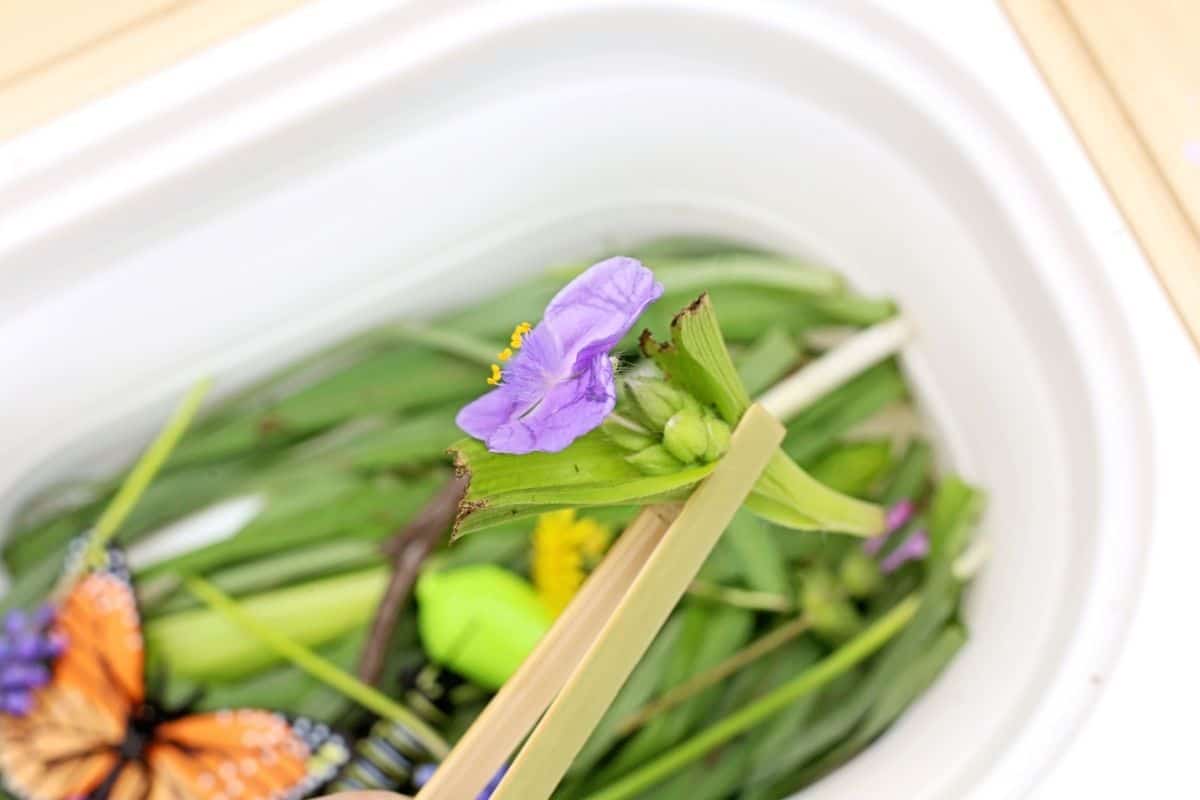
Search and discover – Children can use the magnifying glass to search through the grass and locate each stage of the butterfly life cycle. Finding the tiny egg or caterpillar hidden among the grass feels a bit like a backyard scavenger hunt.
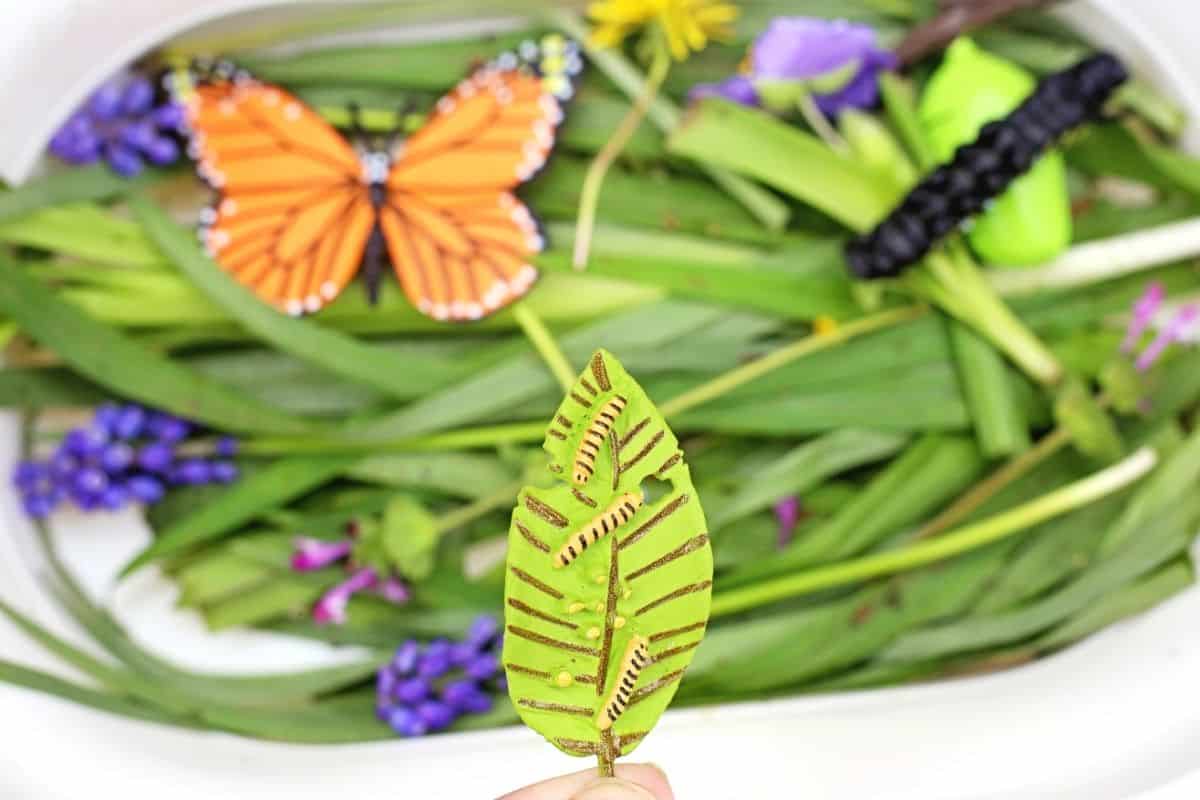
Study the life cycle – Once the pieces are found, kids can place them in order: egg, caterpillar, chrysalis, and butterfly. They can examine the shapes and details using the magnifying glass. You can let them do this unaided or use this as an opportunity to talk to them about
Create nature scenes – Kids may decide to arrange the flowers and grass to create habitats for the caterpillar or resting places for the butterfly.
Storytelling play – Imaginative kids can create little stories about the caterpillar eating leaves, forming a chrysalis, and emerging as a butterfly. This is what I love about sensory play, watching children’s imagination come to life.
Benefits of this butterfly life cycle sensory bin
There are lots of benefits of introducing sensory play to young children. Here are the ones I can think of for this particular sensory bin.
Hands-On Science Learning
Children learn about the butterfly life cycle in a concrete, visual way. Instead of memorizing stages, they can physically move the pieces and see the transformation process. I personally don’t think you can beat learning through play for young children.
You may also like to use this Butterfly Life Cycle Printable Craft to enhance the learning in this activity.
Sensory Exploration
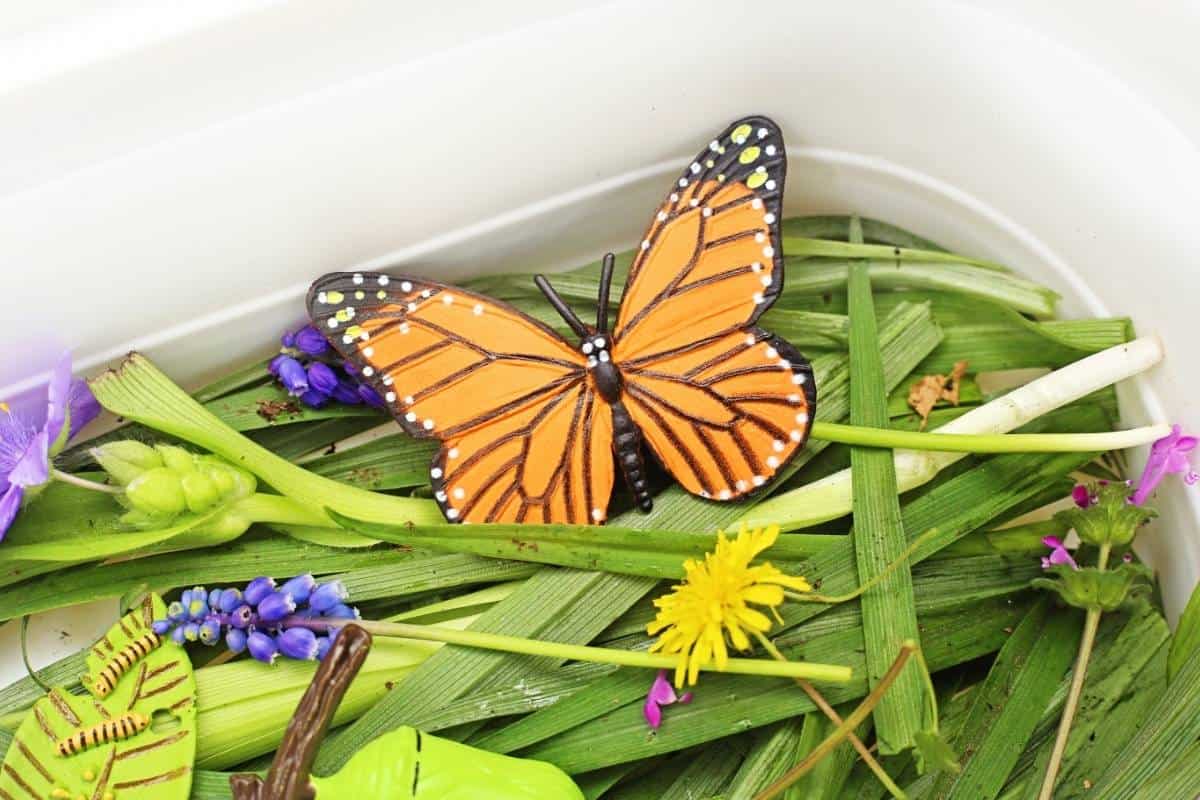
The textures of grass, flowers, and small objects stimulate tactile exploration for childrenn. Sensory play encourages kids to investigate their environment using multiple senses.
Fine Motor Skill Development
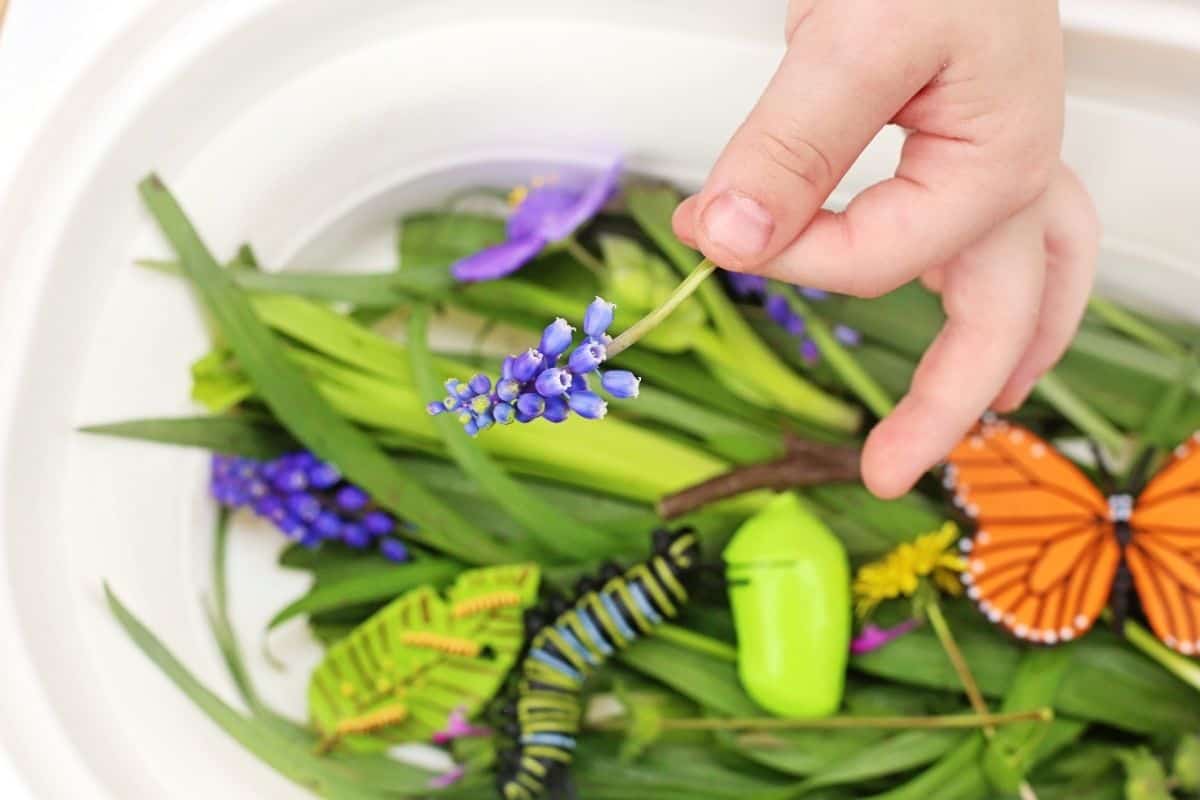
Picking up small pieces, arranging them, and using a magnifying glass all strengthen fine motor control and hand eye coordination in young children.
Encourages Curiosity About Nature
The nature-themed materials help kids connect the activity to real outdoor environments. It can encourage conversations about insects, gardens, and butterflies they might see outside.
Supports Language and Communication
As children describe what they see or tell stories about the caterpillar turning into a butterfly, they practice new vocabulary and storytelling skills.
Supervision reminder
Always supervise young children during this activity to make sure they don’t put anything they shouldn’t in their mouths.
Our favourite butterfly life cycle books and resources
There are lots more fun ways to teach children about the lifecycle of a butterfly. The toy I have used in this activity is one of my favourites. You can buy it here – Butterfly life cycle toy.
Here are some of our favourite picture books to help.
The very hungry caterpillar by Eric Carle. This book is a classic for a reason and a great place to start teaching children about the butterfly life cycle.
How Does a Caterpillar Change? From the World of Eric Carle, this book has all the same graphics as the main story but this one focuses on the butterfly life cycle and that the caterpillar eats leaves (not all the fun food in the original story.
National Geographic caterpillar to butterfly – this book not only teaches the life cycle but it is written so that early readers (level 1) can read it to you.
More butterfly and bug activities for kids
Find a full guide to all my bug activities for preschool here.
Create your own butterfly with this simple craft – butterfly watercolor craft
Create caterpillar art with this cute sponge painted caterpillar