

We were recently sent a copy of Forest craft, A child’s guide to whittling in the woodland by Richard Irvine to review. As you know we love forest school and creative projects in general. I love this book which has made me rethink my previous idea that whittling was too advanced for us. As Richard points out, everyone starts out as a beginner at anything and it’s only with practice that we gain skills. Whittling is a great thing to do with sticks.

Ad – This post contains affiliate links. As an Amazon Associate, I earn from qualifying purchases. If you purchase through the links I may earn a small commission at no extra cost to you.
Richard is a teacher with over 20 years experience of outdoor learning. He’s also an accomplished greenwood carver so in this book he uses these skills to help you learn to whittle. Forest craft is packed full of useful information and inspiring projects. The book starts with a general introduction to whittling and why you must try this meditative craft. It’s certainly inspired me. Richard talks about how to tell when your child is ready to use tools like knives to carve wood. He also explains how to use the book to learn to whittle. The projects start off really simple and progressively get more complicated and require more tools. I love all the projects in the book from simple beads and whistles to more complicated but magical spanbaum (wood shaving tree) and gypsy flowers.
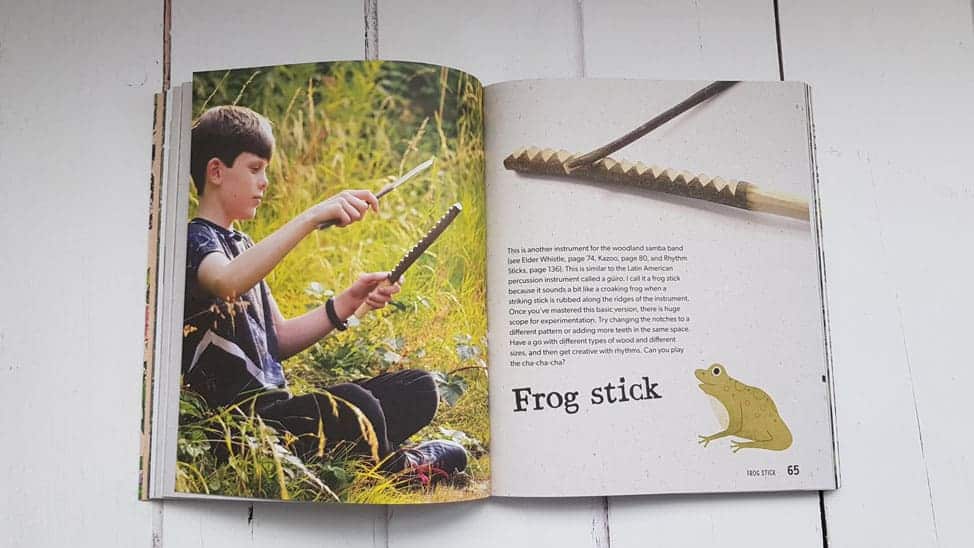
There is also a lot of information at the beginning about the kinds of tools you will need and how to care for them. Richard is keen to keep wood carving accessible to all so he talks a lot about keeping costs of tools down. You can also find information on different types of tree and which type of wood is good for whittling. Richard really makes starting whittling seem so easy and accessible to all.

Next up is a chapter on different carving techniques that you will come across in the book. This is a really useful reference section to refer back to. Then the book moves on to the projects. By working through the projects in the order they are laid out, you will gain new techniques each time. Each project is clearly described with lots of step by step instructions and clear photos. They are carefully designed to increase your skills and confidence each time. We love this book. It’s the perfect beginner’s guide to whittling. Perfect for adults that want to learn this beautiful craft themselves or for those who want to teach their children. The projects are both achievable and magical. Richard guides the reader every step of the way. What’s stopping you trying whittling? The worst that can happen is you create some more firewood.

If you love the sound of this book then read on for your chance to win a copy after this extract from the book. Extract shared here with permission, Forest craft by Richard Irvine, published by GMC Publications, £14.99, available now from * Amazon.
Sample project from the book
Mini furniture

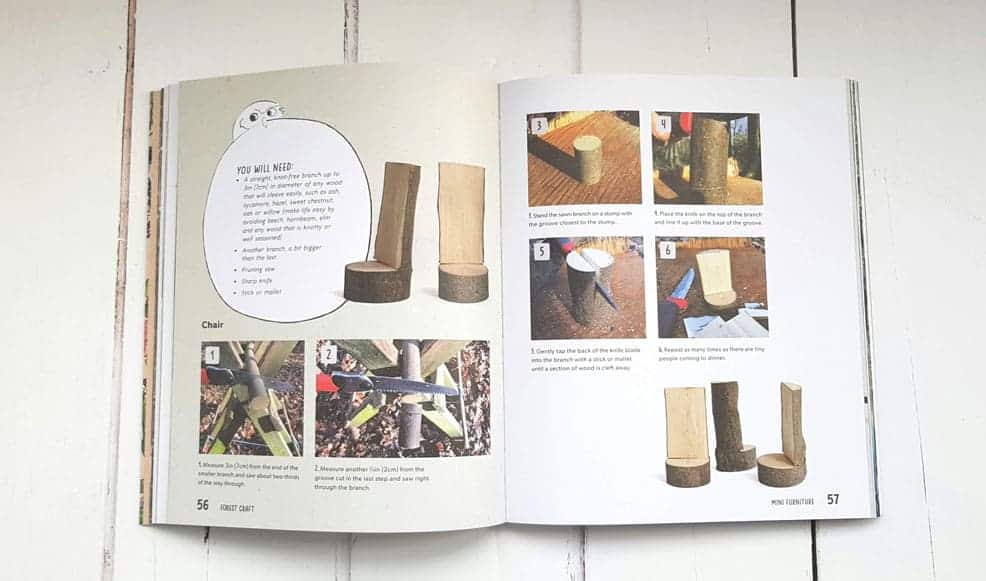
During one Forest School programme with a small group of preschool children, I put a small door between the buttress roots of a big oak tree. Once some of the children had discovered it they entered into some very involved small world play. They then asked to make some furniture for the fairies who they told me lived behind the door. I helped them use a saw and knife to make chairs and tables like those in this project and, as so often happens, they used all the offcuts and waste wood to invent new items to furnish the fairies’ house.Once you’ve made a table and a few chairs, why not use the same techniques to make a standard lamp, coffee table, sofa and a big flat-screen TV?You will need:A straight, knot-free branch up to 3in (7cm) in diameter of any wood that will cleave easily, such as ash, sycamore, hazel, sweet chestnut, oak or willow (make life easy by avoiding beech, hornbeam, elm and any wood that is knotty or well seasoned)Another branch, a bit bigger than the lastPruning sawSharp knifeStick or malletChair
- Measure 3in (7cm) from the end of the smaller branch and saw about two-thirds of the way through.
- Measure another 3⁄4in (2cm) from the groove cut in the last step and saw right through the branch.
- Stand the sawn branch on a stump with the groove closest to the stump.
- Place the knife on the top of the branch and line it up with the base of the groove.
- Gently tap the back of the knife blade into the branch with a stick or mallet until a section of wood is cleft away.
- Repeat as many times as there are tiny people coming to dinner.
Table
- Measure about 1⁄2in (1cm) from the end of the larger branch and saw a groove about 3⁄4in (2cm) deep all the way around.
- Measure about 1in (3cm) from the groove and saw all the way through the branch.
- Place the sawn piece down with the groove closest to the stump.
- Gently tap the back of the knife blade into the branch with a stick or mallet until a section of wood is cleft away. The split should stop at the grooved cut – be careful not to tap too hard or you will chop through the other side of the groove cut.
- Turn the piece of wood less than 90 degrees and repeat step 4 until you have gone all the way around.
- Repeat step 5, splitting smaller sections of wood each time to leave a round table leg.
- Turn the wood over and you have made a micro round table.
If you love this book, you might like to head to this post and find out about another book from GMC books, Forest School.
If you want more ideas for forest school activities, then you’ll love my extract from the book Wild days, Richard Irvine – find it here – how to build a den with sticks.
More forest school inspired play ideas
If you want ideas for toddlers then I have lots here – Forest school activities for 2 year olds
If you are looking for ideas for children of all ages, then you need this post – Fun forest school activities to do at home
Pin for later:

Disclosure – We received this book (and the giveaway copies) in exchange for an honest review. All thoughts and opinions are my own. This post contains affiliate links. If you purchase through them, I may make a small commission. This does not affect the price you pay.
It looks really simple to follow! We want to move forward with forest education for our son and getting back to nature is fantastic for my mental health. Excited to take a closer look at this book.
No but I will try in future!
Many years ago I used to whittle, notmally ended carving up my pencils. Haven’t done any for years though.
Not something I’d ever thought to try, but looks like a great book.
Looks really good!
Just what we need to pull our children away from all the screens in their lives
no ive never tried it before xx
no not at all! x
I’ve never tried it but I’d definitely love to
Not so far but I would love to with my kids
Yes, years ago but I wasn’t very good at it
No never tried it
Yes, my father kept a little pen knife for gardening and maintenance jobs so he showed me how to whittle with it.
Ive never tried it but id love to!xx
No, I haven’t tried whittling before.
Never but its something to think about
no, this would be a new adventure for me!!
Never tried but I’d love to!
No I haven’t. Not yet
No, I’ve never even heard of it before
I haven’t but I would love to give it a go.
Never, but would like to!
I’m hoping to start whittling with my twins soon, I’m thinking about getting them whittling knives for their 5th birthday.
No but looks fun
love whittling so relaxing
Years ago ! Time to try again
Never tried it but it looks great!
Have you tried whittling before? No, but l’d certainly like to give it a go
I have never tried it but looks like a lot of fun
No but it looks great fun!
I have never have.
No but I’d like to
No, but I’ve wanted to for a while.
perfect for guide camp
Never tried it but know my hubby would love to try it with the kids
wow, what great ideas
No, I’ve never heard of it!
No we have never tried it
No, I’ve not heard of it before
No, I have not tried whittling
I’ve dabbled with whittling as part of my forest school training but never have ideas of what I could turn the stick into. Looks like some great ideas for projects here.
Yes I have tried whittling at forest school where I work.
Something to inspire the young to get outside
ive never tried whittling!
Yes I have but years ago. I’d forgotten how enjoyable it was.
Yes my husband and son often carve things from bits of wood.
No but I have just bought a house in the country and would love to try.
Nope never tried before
I haven’t but I would like to
Ive never whittled wood, but I would like to
No Never tried it Before.
I have but I wasn’t great at it . My son however was fantastic at it. He loved the challenge and being trusted to be careful.
No I’ve never tried it before.
No but it sounds great fun!
Yes, we do it at Forest School
No, but I think my kids & I would enjoy it!
Never tried it would love to have a go thanks for the chance
I have never tried whittling before but my daughter has at Forest School. Id love to win this and do some fun things as a family.
never even heard of it before now but would love to have a go
ive never tried
I haven’t tried whittling before.
Have never tried, but it would be a fab skill to learn, especially with having two boys who love going on adventures in the woods.
Looks great, I would love to try this ..
Never tried it x
Yes -on a Forest School day. It was so much fun I would love to try it again!
I have never tried whittling but would love to give it a go
No but we’re always up for something new and fun 🙂
Never – but having the South Downs and plenty of forest land on our doorstep probably means we should try!